 By
By 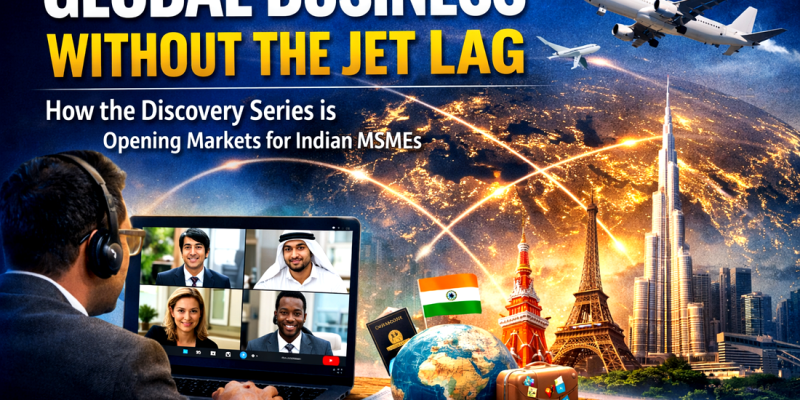
For many Indian entrepreneurs, the dream of going global begins with a deceptively simple question: What does it actually take to do business in another country?
Not the polished story in investment brochures, but the real experience. The moment you land in a new city. The first meeting with a distributor. The cultural signals that determine whether a conversation becomes a partnership-or quietly fades away.
For India’s millions of micro, small and medium enterprises (MSMEs), these nuances often determine success abroad. And yet, most entrepreneurs only discover them through expensive trial and error.
Should you push aggressively for a deal, or spend weeks building relationships first? Is it acceptable to challenge a senior executive during a meeting? Is silence in a negotiation a sign of disagreement-or respect?
These questions might sound subtle. In global business, they are decisive.
This is precisely the gap the Discovery Series seeks to bridge.
Launched by World Trade Center Bengaluru, in collaboration with the Bangalore Chamber of Industry and Commerce, the Discovery Series is a virtual program that introduces Indian businesses to international markets-before they ever set foot there.
Rather than offering theoretical lectures, the series convenes trade officials, business leaders, diplomats, and World Trade Center representatives from around the world. Each episode focuses on a specific country and provides practical insights into how business is actually conducted in that market.
The result is something rare: a real-world orientation to global commerce.
The Subtle Art of Doing Business Across Borders
One of the most striking lessons that emerges from the Discovery Series is how dramatically business culture varies across countries.
Take Japan, for instance. Meetings there often begin with the careful exchange of business cards, presented and received with both hands-a small gesture that signals respect and professionalism. Writing on someone’s business card or casually putting it away can be perceived as disrespectful.
Decision-making in Japanese companies is also slower and more consensus-driven than in many Western markets. Negotiations frequently involve a process known as nemawashi-informal consultations across the organization before a formal decision is made. This process can stretch negotiations to months rather than weeks.
In contrast, business culture in the Netherlands is famously direct and egalitarian. Employees often speak candidly in meetings, even when senior management is present. A Dutch professional might openly disagree with a boss if they believe a proposal is flawed-something that would be considered inappropriate in more hierarchical cultures.
Meanwhile, in Vietnam, relationships-known locally as quan hệ-are the foundation of business. Companies often prefer to build trust through multiple meetings and social interactions before discussing contracts or pricing. Negotiations tend to move slowly, with an emphasis on long-term partnerships rather than quick transactions.
Even the pace of decision-making varies widely across cultures. In many Asian markets, negotiations can take two to three times longer than in Western economies because companies prioritize consensus and relationship-building before closing deals.
These differences are not merely cultural curiosities. They can determine whether an international venture succeeds or fails.
Why MSMEs Need This Knowledge
Large multinational corporations typically employ consultants and cross-cultural advisors before entering new markets. Indian MSMEs rarely have that luxury.
Many entrepreneurs learn these lessons only after costly missteps.
A founder might mistake Japanese politeness for agreement, only to discover later that the partner never intended to proceed. Or an exporter might push aggressively for a quick decision in Vietnam, unknowingly damaging a relationship that required patience.
Professionals discussing cross-border negotiations on online forums frequently highlight these misunderstandings. One negotiator noted that a direct, confrontational style that works in Western markets can feel “too aggressive” in Japan, where communication tends to be more indirect and consensus-driven.
Another pointed out that silence during negotiations-awkward in many Western cultures-is often simply a sign that counterparts are thinking carefully about the proposal.
These nuances are precisely the kind of insights the Discovery Series aims to surface.
From Theory to Real Opportunity
Across its first nine episodes, the Discovery Series has explored a diverse set of markets including the United Arab Emirates, Japan, Netherlands, the Philippines, France, Australia, Nigeria, Vietnam, and Belgium.
Each market offers different opportunities for Indian companies.
Belgium, for example, serves as a gateway to the European Union, giving businesses access to a market of over 400 million consumers. Vietnam represents one of Asia’s fastest-growing manufacturing hubs. The UAE remains a strategic base for companies targeting the Middle East and North Africa.
For Indian exporters and startups, understanding these ecosystems can dramatically shorten the learning curve of international expansion.
The Discovery Series also connects entrepreneurs to the global network of the World Trade Centers Association, which spans hundreds of trade centers across nearly 100 countries. Through these networks, businesses can identify potential partners, market-entry advisors, and local industry groups.
The Conversation That Opens Doors
A strong team is key to bringing the world to people’s screens!
Vivek George is a dynamic trade professional at World Trade Center Bengaluru, playing a key role in connecting Indian businesses with global markets. With a background in engineering and an MBA in marketing and human resources, he brings both analytical depth and strategic insight to international trade development. Vivek has been instrumental in organizing global trade dialogues, industry forums, and market-discovery initiatives that help Indian MSMEs explore overseas opportunities. Through collaborations with international chambers and the World Trade Centers Association, he helps build bridges between entrepreneurs, investors, and policymakers-contributing to a growing ecosystem that positions India’s businesses confidently on the world stage.
April Varkey assists with the logistics and coordination of the program. She is a business development professional at World Trade Center Kochi, where she plays an active role in strengthening global trade connections for Indian enterprises. Known for her energy and organizational acumen, she contributes to the design and execution of international business forums, trade dialogues, and knowledge platforms that connect entrepreneurs with global markets. With prior experience at the Centre for Public Policy Research, April brings a strong understanding of policy, commerce, and stakeholder engagement. Her work helps create meaningful opportunities for businesses, startups, and MSMEs to engage with global partners and navigate international markets with greater confidence.
Karnvir Mundrey, a podcaster and marketing strategist who also leads the communications firm Atharva Marcom, moderates the event. Rather than simply moderating discussions, Mundrey approaches each conversation with the curiosity of a journalist and the pragmatism of an entrepreneur. His questions push panelists beyond surface-level commentary, probing for the insights that founders actually need.
How long does it take to register a company in this market? What mistakes do foreign companies make most often? Which sectors are currently welcoming Indian partners?
The answers often reveal opportunities that might otherwise remain hidden.
For example, panels discussing Southeast Asia have highlighted growing demand for Indian IT services, digital transformation expertise, and educational partnerships. Conversations about Europe have focused on sustainability, manufacturing partnerships, and technology collaboration.
For entrepreneurs listening in, these insights can serve as early signals of emerging opportunities.
A New Model for Global Exploration
In the past, exploring a new market meant boarding a flight, attending trade fairs, and scheduling weeks of meetings.
Today, much of that discovery can begin digitally.
The Discovery Series reflects this shift. Instead of waiting for entrepreneurs to travel abroad, the program brings global expertise directly to their screens-allowing them to understand a market’s culture, opportunities, and challenges before making their first visit.
For India’s MSME sector-often described as the backbone of the economy – this kind of access can be transformative.
Because sometimes the most important step in global expansion is not signing a contract.
It is simply understanding the world a little better.
With its upcoming tenth episode, the Discovery Series is poised to continue doing exactly that: helping Indian entrepreneurs decode the complexities of international business—one country, one conversation, and one insight at a time.
To be a part of the program reach out to Vivek George or April Varkey at the World Trade Center, Bangalore. Email: vivek@wtcbengaluru.org or aprilvarkey@wtckochi.org









Comments