Notes from the the Discovery Series – World Trade Center Bengaluru, Chennai and Kochi, with the Bangalore Chamber of Industry and Commerce and World Trade Center Binh Duong New City.
There is a product sitting in a factory in Vietnam right now that cannot come home.
An Indian businessman went across, found a manufacturer, got a fruit-based product made to his specification, and lined up his customers in India. The goods exist. The buyer exists. The order exists. What does not exist is a single signature.
FSSAI wants a recommendation from the relevant Vietnamese government department before the consignment can enter India. The manufacturer says he has tried everything. Nobody on that side is willing to put a name to the paper. That deadlock is now a year old.
His Excellency N.S. Srinivasa Murthy, Honorary Consul of Vietnam for Karnataka, told that story on the panel almost as an aside. It was the most instructive minute of the hour.
Because this is not a story about Vietnamese bureaucracy. It is a story about an Indian entrepreneur who solved the interesting part of the problem – the product – and assumed the boring part would take care of itself.
The rule he broke is the one nobody enforces on themselves: when doing business in Vietnam, regulatory due diligence happens before the deal, not after it. Do not assume that because a Vietnamese factory can manufacture something, you can import it. Do not assume that because you sell something legally in India, you can sell it in Vietnam. In both directions, the paperwork is not the last step. It is the first one.
I opened the session with a sentence I had posted earlier that week, and everything below is downstream of it:
Vietnam is not a shortcut. It is a filter. If you respect time, silence, hierarchy and process, Vietnam will reward you.
Why Vietnam is not the next China
The laziest sentence in Indian boardrooms right now is “Vietnam is the next China.”
It is not. Vietnam is not China with cheaper labour and a friendlier passport queue. It is a disciplined system, and it runs on a logic most Indian founders have never had to operate inside.
What Vietnam has built is a free market with a controlled essence. Capital is welcome. Long-term intent is respected. Speed, aggression and jugad – the Indian instinct to find the one person who can make the rule go away – are not rewarded. They are noticed, and they are quietly filed.
This is why the country opens some sectors wide and keeps others clamped shut. It is not inconsistency. It is sequencing. The state decides what it needs from the outside world and when, and foreign capital is invited into the gap rather than allowed to define it.
Once you accept that, the strange bits stop being strange. Slow pharmaceutical approvals are not an obstacle course. They are a filter. The filter is the point.
And it changes the question you should be walking in with. Most Indian companies arrive asking:
“How cheaply can I manufacture in Vietnam?”
The question that actually produces a business is:
“Where does Vietnam have a capability gap, a market need or a strategic priority that my Indian company can serve?”
The first question makes you one of a thousand cost arbitrageurs. The second makes you useful to a state that is explicit about what it wants.
The Bhagavad Gita has a word for what Vietnam asks of you, and it is not jugaad. It is tapas – sustained, unglamorous heat applied over time until it converts into capability. Jugaad is the art of getting the result without paying the cost. Tapas is the discipline of paying the cost until the result becomes inevitable. Vietnam is a tapas market. India has trained an entire generation of entrepreneurs in the opposite reflex.
Vietnam’s new map: North, Centre and South
Ms. Huynh Dinh Thai Linh, CEO of World Trade Center Binh Duong New City, has watched this country rebuild itself twice.
She was born in Hanoi. Her family moved to Ho Chi Minh City more than thirty-five years ago. She saw the first wave after 2000, when Panasonic and Samsung put down factories and Vietnam became a manufacturing destination. She is now inside the second wave, in which the same country is being pushed towards digital transformation and renewable energy without giving up the factories.
Her group, Becamex, runs around thirty-three industrial parks across Vietnam and has hosted more than four thousand FDI investors over three decades. That is not a brochure number. That is thirty years of watching foreigners succeed and fail at exactly the thing you are about to attempt.
And Vietnam has just redrawn itself. The country has consolidated from sixty-four provinces to thirty-four. Binh Duong is now part of Ho Chi Minh City. The metropolitan area runs to roughly six thousand square kilometres. The stated plan is a science-and-technology city to the north of Ho Chi Minh City, an International Financial Centre at its core, and an ambition that gets named openly: build the south into Vietnam’s Shanghai.
If your Vietnam research is more than eighteen months old, your map is wrong.
The working geography, as Guillaume Rondan of Move To Asia laid it out, breaks into three:
The North. Proximity to China, which means raw material supply chains that commute across the border and a heavy presence of Chinese-owned sub-factories. This is where the high-innovation cluster is forming — Viettel, the military-linked technology giant, is building the country’s first chip fabrication facility here.
The Centre. Rising, underrated, cheaper on labour and on long-lease land. Worth looking at if you are building your own facility rather than buying capacity.
The South. The dense industrial cluster. In Binh Duong alone, roughly two thousand furniture factories, most producing entirely for export, plus the metal and component subcontracting layer beneath them and a growing electronics manufacturing services base. The widest range of factories in the smallest radius.
Here is the operational consequence most Indian companies miss. If you need distribution in both the north and the south, you do not run one market entry. You run two. Same analysis, same partner qualification, same time on the ground, twice. Guillaume made a point that should embarrass anyone who thinks Vietnam is culturally monolithic: when he sends his own Ho Chi Minh City staff north, they hesitate. His own people. In their own country.
Which produces the correct framing for the whole exercise. You do not enter Vietnam. You enter a specific Vietnamese opportunity, in a specific cluster, through a specific channel. Location follows the supply chain, the customer and the regulator – never the headline price of land.
Three sectors where Indian companies fit Vietnamese needs
Vietnam is not short of ambition, capital or manufacturers. It is short in specific places, and those gaps are where an Indian company has something to sell.
Pharmaceuticals
Vietnam imports around fifty-five per cent of the medicines it consumes. Its population is ageing. That import dependence is going up, not down. India is the one country on earth whose entire industrial identity is built on solving exactly this problem at exactly this price point. The opportunity is obvious. The route is not: registration, regulatory pathway, local partner and distribution all need to be mapped before a single carton ships.
Agritech and smart farming
Vietnam’s agricultural export machine is running hot – coffee exports were cited at around eight billion dollars last year, a jump of roughly forty per cent, with cashew crossing five billion. Volume at that scale creates a technology deficit at the farm and processing layer.
So the question is not “what agricultural product can I sell to Vietnam” – that country grows more of most of it than we do. The question is: what technology helps Vietnam grow, process, certify, trace and export more efficiently? Climate-smart farming, traceability systems, processing intelligence. You would be selling into a market that is already earning the money to pay for you.
Digital transformation and SME software
Vietnam has stated an intent to have thirty per cent of GDP linked to the digital economy by 2030. Do not walk in assuming a technology vacuum – Vietnamese IT capability is genuinely strong, and the strong domestic players will absorb the large Vietnamese corporates first. That leaves the SME layer – SaaS, cybersecurity, fintech – structurally underserved. Your natural customer in Vietnam is a Vietnamese SME the big local firms will not bother to call on.
Underneath all of it, India-Vietnam bilateral trade grew around ten per cent between 2024 and 2025, on top of more than a decade of compounding. The current legal architecture is the ASEAN–India trade agreement. A deeper bilateral framework would help. Nobody should wait for it.
A distributor is not a partner
This was the sharpest warning of the evening, and it was delivered without drama.
Consul Murthy’s criteria for a Vietnamese partner: relevant entrepreneurial experience, direct exposure to your specific industry, and the ability to actually guide an Indian investor through the local environment. His verdict on the availability of such people was blunt. Finding one is not easy. He has tried.
Now set that against how most Indian market entry actually runs.
You find a company with a website, a factory and a plausible product range. You sign an agreement. You ship. You wait for the business to happen.
It does not happen. And the reason it does not is that you appointed a logistics endpoint and called it a partnership.
Vietnam runs on closed circles. People trust their peers, their families and the relationships they have been building for years. A stranger arriving with a good price is not a proposition. He is an interruption. This is why the introduction – through a chamber, a trade centre, a delegation, a facilitator the room already trusts – is not a courtesy. It is the mechanism of entry.
And face-to-face is not a preference. Vietnamese counterparties sit down to establish whether you are aligned, not merely whether you are cheap. The coffee, the long dinner, the second visit with no agenda: that is not overhead ahead of the business conversation. As Guillaume put it, the personal relationship here can end up stronger than the commercial one.
His warning to anyone planning a quick reconnaissance trip was uncompromising: do not run trial and error in Vietnam. Companies come, meet nobody useful, sign nothing, and leave with a permanently poor impression of a market that was never going to open itself to a three-day visit.
On structure, the practical advice was to stay flexible. Test whether a hundred per cent foreign-owned entity is actually viable for your sector under current regulation. Where it is not, treat a joint venture or a distributor relationship as a soft landing – a way to read the market, iterate the product and earn standing – with full ownership as a later step rather than a precondition. In the regulated sectors, that patience is the difference between entering in six months and never entering at all.
And for agri-exporters, the layer that quietly kills margins: SPS norms, traceability requirements, port-level rejection. A rejected consignment at a Vietnamese port is not a customs problem. It is a documentation failure created in India, months earlier.
Visibility is not distribution
When twenty-five to thirty Vietnamese coffee producers set up excellent stalls at an international coffee congress in Bangalore, everyone admired them. Very little business followed.
Consul Murthy’s question was the right one: what use is the publicity if it does not convert?
This should be read carefully by every Indian company planning to walk a Vietnamese sourcing exhibition this year. The exhibition is not the market-entry strategy. It is one instrument inside it, and its value is created almost entirely outside the hall.
Before you book the flight, you should be able to answer:
Who specifically are the buyers or suppliers you want in front of?
Which distributors or channel partners are attending, and have meetings been scheduled in advance?
Is your product compliant for the destination market, on paper, today?
Has your landed pricing been worked out, including duty and certification cost?
Who follows up, in what language, within what window?
Who is the local partner or facilitator who will keep the relationship warm between visits?
What happens after everyone flies home?
A trade show is the beginning of a process. Most Indian companies treat it as the conclusion of one.
The decision-maker Indian marketers keep missing
One dimension of Vietnam almost never makes it into an Indian market-entry deck: the weight women carry in that economy.
Thai Linh’s answer was measured. Most senior political leadership remains male, she said, and that leadership has been actively supportive – women have been empowered into entrepreneurship and into government roles, and over the last fifteen years their position in the economy has become critical rather than incidental.
The sharper point was about the household. In Vietnamese families, education decisions sit with the mother. Which is why, she said, the overwhelming majority of Vietnam’s education and edtech startups are founded by women. They started companies to solve their own children’s schooling.
If you are an Indian edtech company entering Vietnam and your marketing is built to persuade a male purchase decision-maker, you have mistargeted the entire market.
Two more things she said, both of which cost money to learn the hard way. Vietnamese parents value Indian English-language capability, particularly written English, and they send children abroad into Western and US-track programmes. That is your opening. But the market speaks Vietnamese, and an unlocalised platform sells only to the thin slice of the country that least needs you.
And a hard number on talent mobility: Indian technical specialists have told her their salary is roughly equal to the international school tuition for one child. That is why they do not relocate. Model that line before you model revenue.
The principle generalises well past edtech. India has capabilities. Vietnam has needs. The business sits in the intersection – not in the assumption that one market is a translated copy of the other.
The India-Vietnam corridor already exists. Almost nobody uses it.
The most under-exploited fact from the whole session is that the introduction problem has already been solved, and it is free.
World Trade Center runs around twenty exhibitions a year and some three hundred business matching events. It works with sixty-five associations in Ho Chi Minh City and across Vietnam. It positions itself as a one-stop contact point that will filter your requirement and route you to the right partner and the right department, so you are not wandering between ministries yourself. Thai Linh stated plainly that they charge no fee. They see themselves as a supporting organisation in the local market.
They are also reactivating WTC Connect this year, a marketplace platform where you can list your product, with webinars and physical showcases built around it. The instruction was simple: email her, get on the newsletter, and if a delegation forms, they will build the matching sessions around it.
On the Indian side, the institutional layer is equally real. The Honorary Consulate in Karnataka has already done the unglamorous work – Vietnam Airlines now flies three services from Bangalore to Hanoi and VietJet three from Bangalore to Ho Chi Minh City, and by Consul Murthy’s account they run full.
The Bangalore Chamber of Industry and Commerce, in its fiftieth year since incorporation in 1975, carries more than nine hundred member organisations, roughly seventy per cent of them MSMEs and largely in manufacturing, plus a hundred-odd startups, across twenty-four expert committees, with MOUs spanning Australia, Calgary, Singapore, Spain, Dublin, the European Business and Technology Centre, and an overseas office in Tokyo.
The corridor is built. The traffic is thin.
There is even a specific, dated opening. An apparel and textile technology fair in Vietnam at the end of February will carry an Indian corner – ten to fifteen Indian companies selling fabric and cotton supplies, for the straightforward reason that Vietnam manufactures garments at enormous scale and does not grow cotton.
Which Indian businesses should enter Vietnam – and which should not
Not everyone should. That is the honest answer, and it is the one the panel kept circling.
Vietnam deserves serious consideration if you are:
a manufacturer looking for a Southeast Asian production base
a pharmaceutical or healthcare company with registrable products
an agritech or smart-farming business
a technology company that can serve SMEs in Vietnamese
a logistics or infrastructure player
a specialised education or training company
an exporter of inputs Vietnam does not produce, cotton being the cleanest example
a buyer looking for reliable sourcing partners
an investor genuinely willing to hold a long position
Do not go if Vietnam is your hedge against a bad quarter at home. Do not go if your plan is a week of meetings and a signed distributor. Do not go if your entire model rests on speed, low-cost transactions and minimal time on the ground — that is not what is on offer here. And do not go if you cannot name the specific regulation that governs your product, because the man with the fruit product in a warehouse could not either.
There is also a trade most Indian exporters overlook entirely. Vietnam runs surpluses in rice, cashew, pepper, coffee and tea. Vietnamese pepper lands cheaper than Karnataka pepper, which means our own side has protective instincts to manage. In several of these commodities the realistic Indian play is not selling into Vietnam at all. It is importing from Vietnam and re-exporting onward.
The first step is to go and sit there
Consul Murthy’s closing advice was the least sophisticated thing said all evening and the most useful. First-hand information is everything, and you cannot acquire it from Bangalore.
Fly to Ho Chi Minh City. Hanoi makes the policy the way Delhi does; Ho Chi Minh City moves the money the way Mumbai does. Book a week – hotels are reasonable, Indian food is everywhere. Forget the tourism entirely. Sit there. Meet companies. Walk industrial parks. Talk to distributors. Meet the chambers and the trade bodies. Have dinner with people you may never do business with. Ask the difficult questions. Then come back and do it again.
The attitude you carry into those rooms decides most of the outcome. The Indian entrepreneur who arrives thinking I know how this works will spend two years discovering that he did not. The one who arrives asking help me understand how this works here will be taught, often generously, by people who have watched four thousand foreign investors try.
A personal note, because it was the moment the abstraction broke for me. When Thai Linh said Vietnam wants to learn from Indian railway development, something landed harder than it should have. I come from a railway family. The world’s highest railway bridge was conceived by my father. There are very few conversations in which India’s infrastructure capability is the thing another country is asking for, rather than the thing we are apologising about.
That asymmetry is the real opportunity in Vietnam, and it has a short shelf life.
India habitually holds a sharper picture of markets that are far away – America, Europe – and a blurred one of the countries closest to us. Vietnam is a short flight with three daily services out of Bangalore, and most Indian businesses know it primarily as a holiday.
The filter is open. It is just not going to lower itself for anybody.
Frequently asked questions about doing business in Vietnam
Is Vietnam the next China for Indian manufacturers? No. Vietnam is a disciplined market economy with strong state sequencing of which sectors open and when. It is not a low-cost substitute for Chinese manufacturing. Companies entering on a pure labour-arbitrage thesis tend to underestimate regulatory pathways, partner qualification and the time required on the ground.
What are the best sectors for Indian companies in Vietnam? The clearest gaps discussed on the panel were pharmaceuticals, where Vietnam imports roughly fifty-five per cent of its medicines; agritech and smart farming, serving an agricultural export base running at scale; and SME-focused software including SaaS, cybersecurity and fintech, tied to Vietnam’s target of thirty per cent of GDP linked to the digital economy by 2030. Textile inputs, particularly cotton, are a further opening because Vietnam manufactures garments at scale but does not grow cotton.
Should Indian companies set up in North or South Vietnam? It depends on the supply chain. The North sits close to China and is developing the high-technology and semiconductor cluster. The South, centred on the Binh Duong and Ho Chi Minh City industrial belt, has the most diverse manufacturing base, including roughly two thousand furniture factories and a growing electronics ecosystem. Central Vietnam is cheaper on land and labour and remains underrated. If you need national distribution, treat North and South as two separate market entries.
How do Indian companies find reliable partners in Vietnam? Through introduction rather than cold outreach. Vietnamese business runs on established circles of trust. Trade centres, chambers and organised delegations perform the introduction function. World Trade Center Binh Duong New City runs business matching at no fee and works with sixty-five associations across Vietnam. A distributor found online is not the same as a qualified partner with industry experience.
What regulatory issues should Indian exporters check first? Product registration and certification in the destination market, sanitary and phytosanitary norms for agricultural and food products, traceability documentation, and import certification requirements on the Indian side including FSSAI recommendation requirements. These must be resolved before commercial agreements are signed, not after.
Are there direct flights from Bangalore to Vietnam? Yes. Vietnam Airlines operates services from Bangalore to Hanoi and VietJet operates services from Bangalore to Ho Chi Minh City, three each by the Honorary Consul’s account, and both were described as running consistently full.
The full panel – His Excellency N.S. Srinivasa Murthy, Honorary Consul of Vietnam for Karnataka; Ms. Huynh Dinh Thai Linh, CEO, World Trade Center Binh Duong New City; and Guillaume Rondan, founder, Move To Asia – is available here: https://youtu.be/5W1tLsv6eDI
Episode eight of the Discovery Series, hosted by World Trade Center Bengaluru, Chennai and Kochi in partnership with the Bangalore Chamber of Industry and Commerce and World Trade Center Binh Duong New City. Moderated by Karnvir Mundrey, Chief Ideation Officer, Atharva Marcom.
This article draws on the discussion and the perspectives shared by the panel. Regulatory, trade and market figures cited by speakers should be independently verified before being relied on for commercial decisions.
Karnvir Mundrey is the Editor of TheFutureOfPR.com. Reach out at tfofpr@gmail.com or at +918296303806.
Eyestem is a cell therapy company founded by a top-class management team consisting of clinical trial, cell therapy and ophthalmology experts. It also boasts a world class advisory board and has built collaborations with pioneers and leaders in the space. Their long-term vision is to create a scalable cell therapy platform to treat incurable diseases […]
The Health Tips Podcast IS about Health & Fitness. But beyond that, its about “Fitting in Fitness”. You probably know everything there is to know about being healthy : Eat Right, Sleep Right, Exercise, keep your weight in the range. And stay off depression. But this time we speak about the C . The Corona […]
The Health Tips Podcast is all about fitting in fitness in a busy schedule! On the Health Tips Podcast, I am always on the lookout for new ways of preventing disease, staying fit and being the best possible version of yourself. So I was amazed to discover a person, who has been able to literally […]
The Health Tips Podcast is all about fitting in fitness in a busy schedule. But this time it’s a – hopefully a once in a lifetime event – when we are all in a lockdown – and we are not busy – but still trying to manage our minds and bodies. Done right, we should […]
Eyestem is a cell therapy company founded by a top-class management team consisting of clinical trial, cell therapy and ophthalmology experts. It also boasts a world class advisory board and has built collaborations with pioneers and leaders in the space. Their long-term vision is to create a scalable cell therapy platform to treat incurable diseases […]
The Health Tips Podcast IS about Health & Fitness. But beyond that, its about “Fitting in Fitness”. You probably know everything there is to know about being healthy : Eat Right, Sleep Right, Exercise, keep your weight in the range. And stay off depression. But this time we speak about the C . The Corona […]
The Health Tips Podcast is all about fitting in fitness in a busy schedule! On the Health Tips Podcast, I am always on the lookout for new ways of preventing disease, staying fit and being the best possible version of yourself. So I was amazed to discover a person, who has been able to literally […]
The Health Tips Podcast is all about fitting in fitness in a busy schedule. But this time it’s a – hopefully a once in a lifetime event – when we are all in a lockdown – and we are not busy – but still trying to manage our minds and bodies. Done right, we should […]

 By
By 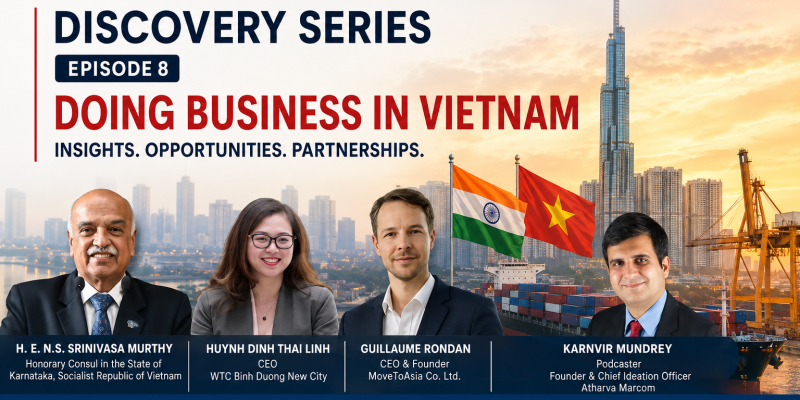







Comments