
 By
By 
Have We Been Treating the Symptoms While the Disease Quietly Grows?
There are some conversations that end when the cameras stop rolling -and then there are those that stay with you, quietly unsettling everything you thought you understood.
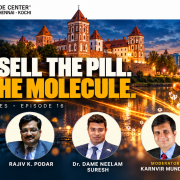
One such moment emerged in our recent three-part episode of The Health Tips Podcast, a discussion that began like any other exploration of health and wellness, but soon spiralled into something far deeper, far more provocative, and, for many, deeply uncomfortable.
At the heart of it lay a deceptively simple idea: what if modern medicine, for all its sophistication, has been focused on managing disease rather than truly understanding or reversing it?
To bring this to life, an analogy was offered-one that is almost impossible to forget once you hear it. Imagine a boat with a leak. Water begins to fill the vessel, and in response, you start throwing the water out. You survive for a while, perhaps even for years, convincing yourself that the problem is under control. But the leak remains. And eventually, inevitably, the boat sinks.
According to the philosophy discussed in this episode, this is precisely how much of modern healthcare operates today. Blood sugar levels are controlled, but diabetes remains. Pain is reduced, but the underlying cause continues to exist. Symptoms are managed, often effectively, but the disease itself is rarely questioned at its root.
Ayurveda, by contrast, approaches the same problem from an entirely different vantage point. Instead of asking how to manage the water, it asks a far more uncomfortable question: where is the leak, and why did it begin in the first place?
It is here that the conversation begins to challenge long-held assumptions about the human body, disease, and even the nature of science itself.
Rather than viewing the body purely as a collection of organs and biochemical reactions, Ayurveda speaks in the language of systems-Vata, Pitta, and Kapha-concepts that describe movement, transformation, and structure within the human body. In a striking attempt to bridge ancient knowledge with modern science, these ideas were even linked to the roles of mRNA, tRNA, and rRNA, suggesting that what was once described metaphorically may now be understood biologically.
Whether one agrees with this mapping or not, the implication is undeniably powerful: that health may not be universal, that there may not be a single solution for a single disease, and that each individual may require a deeply personalised approach.
Perhaps the most controversial claims of the discussion emerged when the conversation turned to conditions like diabetes and cancer-diseases that have become almost synonymous with permanence in modern thinking. It was argued that what we commonly refer to as diabetes may not be a single condition at all, but rather a spectrum of disorders, many of which could potentially be reversed when the underlying causes-diet, lifestyle, stress, and environment-are addressed correctly.
And then came a perspective that few in conventional discourse are prepared to consider: that the true drivers of disease may not lie primarily in external factors such as pollution or pathogens, but in the invisible, often overlooked terrain of human relationships.
The idea that chronic stress, unresolved conflict, and emotional strain could manifest physically within the body was not presented as a peripheral theory, but as a central pillar of understanding health. According to this view, the biochemical responses triggered by constant psychological tension-whether in families, workplaces, or personal relationships-can gradually disrupt the body’s internal balance, eventually giving rise to what we label as disease.
Layered onto this were observations about modern lifestyle habits that many might find uncomfortably familiar: the widespread consumption of stale or processed food, the normalization of late nights and disrupted sleep cycles, and the increasing dependence on stimulants such as caffeine and sugar, all of which, according to the discussion, contribute to a slow but steady erosion of metabolic health.
What emerges from this is not merely a critique of modern medicine, but a broader reflection on how we have come to live.
And yet, perhaps the most striking part of this conversation-especially for readers of The Future of PR-is not the science, but the storytelling.

Because if Ayurveda truly contains insights of this depth and scope, then why has it remained on the periphery of global healthcare for so long?
The answer offered is both simple and uncomfortable: it was never marketed.
For centuries, Ayurveda existed as a body of knowledge deeply embedded in culture, tradition, and practice, but rarely articulated in a way that the modern world could understand, measure, or adopt. While Western medicine built institutions, conducted global campaigns, and established itself as the default framework for health, Ayurveda remained understated, often confined to quiet practice rather than bold communication.
Add to this the historical disruptions of colonisation and the cultural inclination towards modesty rather than promotion, and a pattern begins to emerge-one in which a potentially powerful system of knowledge was not rejected outright, but simply never fully presented to the world.
Today, however, there are signs that this may be changing.
As global conversations shift towards prevention, lifestyle, and holistic well-being, and as increasing numbers of people begin to question the limitations of purely pharmaceutical approaches, Ayurveda is slowly re-entering the discourse-not as an alternative, but as a perspective that demands attention.
This is not, and should not be, framed as a binary choice between systems, nor as a rejection of modern medical advances that have undoubtedly saved millions of lives.
Instead, it is an invitation to think more deeply, to question more openly, and to recognise that the future of healthcare may not lie in choosing one approach over another, but in understanding where each one begins—and where it falls short.
Because if there is one takeaway from this conversation, it is this: that the most important questions about our health may not be the ones we are currently asking.
🎥 Watch the Full 3-Part Series
Part 1: https://www.youtube.com/watch?v=t6DenrAjQSs
Part 2: https://www.youtube.com/watch?v=8WugPk2KyZs
Part 3: https://www.youtube.com/watch?v=Tk7hYeq5mec
Book: https://amzn.to/4bUo29I
Siddharth Sengupta is the Founder and Managing Director of Samskrt Natural Wellbeing Company, Private Limited that is focused on preventive, predictive healthcare and reversal of lifestyle diseases, which is based on Ayurveda. Contact now to live a disease free & toxin free life ! Call for Ayurvedic Panchakarma Treatment at +91-70459 64227
Karnvir Mundrey is the founder of Atharva Marcom and the producer of The Health Tips Podcast. He is also the producer of the podcast Finest Fintalk.









Comments